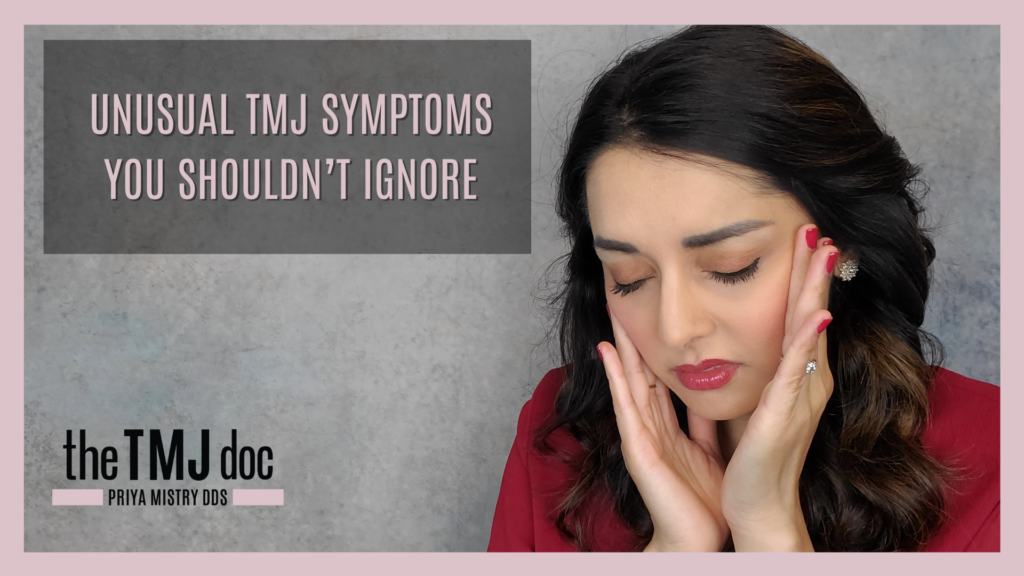
Jaw pain, clicking, and headaches are things most people associate with TMJ dysfunction, but Dr. Priya Mistry wants you to know that the ways TMJ shows up can be much broader than just aching jaws. Sometimes, symptoms appear in places you wouldn’t expect; when those unusual signs are understood as part of your body’s response to jaw strain and imbalance, you can get the right care sooner and avoid years of unnecessary discomfort.
Here are some of the unexpected symptoms that can be connected to TMJ issues, what they may mean, and when it’s time to seek help.
Ear-Related Symptoms
Many patients complain of ear pressure, a sensation of fullness, ringing in the ears, or even muffled hearing, and think it’s an ear problem. But when the jaw joint is stressed, the muscles and nerves around the ear can become involved; that can create sensations that mimic ear conditions, without any actual inner-ear pathology. If your ears feel blocked; if you have intermittent ringing or popping with jaw movement; or if ear pressure comes and goes with jaw activity, this may be part of the TMJ picture.
Facial Pain That Isn’t Tooth-Related
If you’ve ever had a “toothache” that isn’t relieved by dental work, or pain along the side of your face that doesn’t fit a simple cavity diagnosis, your jaw muscles could be the source. Overworked chewing muscles can refer pain to the cheek, upper jaw, lower jaw, or along the side of the face; this is often misdiagnosed as tooth pain, sinus pain, or neuralgia. TMJ-related muscle tension can mimic many other conditions.
Headaches and Neck Pain
Frequent headaches upon waking, tension headaches that start around your temples, or neck stiffness that doesn’t respond well to massage or stretching alone can all tie back to jaw muscle overload. The jaw muscles connect with the muscles around your neck and base of the skull; when they’re pulling too hard, it can trigger headaches or upper-neck discomfort that feels unrelated to the jaw, until you see how the system works together.
“Random” Jaw Clicking, Locking or Popping
Some people hear clicking or popping in their jaw and think it’s no big deal; others experience momentary locking or catching. These sounds and sensations can be signs that the joint surfaces are not moving as smoothly as they should, or that the muscles around the joint are out of balance. It’s not always painful at first; in many cases, symptoms like this show up before pain becomes constant.
Sensitivity in the Teeth or Bite Changes
Have you ever noticed your bite feels different, your teeth feel sensitive when chewing, or restorations that used to feel fine suddenly don’t? These subtle changes in bite sensation can be connected to changes in jaw position and muscle tension; the muscles adapt, your bite may shift slightly, and your teeth can start to feel “off” without any new dental problem.
Difficulty Opening or Closing the Mouth Smoothly
Locking, catching, or a feeling that your jaw gets tired when you open wide to eat, yawn, or speak can be another early sign. This happens when the joint or the muscles that guide the joint aren’t moving in harmony; over time, this can become more noticeable.
Earaches, Tinnitus, or Dizziness
Some patients experience sensations that feel like an earache without infection, ringing in the ears (tinnitus), or even lightheadedness. These can be confusing symptoms, and many providers focus only on ears or balance when evaluating them. However, the jaw joint sits very close to the ear and shares muscular and neural connections with the head and neck; dysfunction in one area can show symptoms in another.
When Simple Care Isn’t Enough
Maybe you’ve tried heat packs, stretching, adjusting posture, or even a store-bought nightguard; and yet these strange symptoms keep popping up. That’s a cue to look deeper, because when TMJ issues aren’t addressed at the system level, jaw joint, muscles, bite, airway, they often persist or evolve.
You should consider professional evaluation when:
- Symptoms occur repeatedly or unpredictably
- Pain moves from one area to another
- The way your jaw feels changes over time
- You’ve had dental or medical treatments that didn’t help
- Symptoms occur alongside increased tension, teeth grinding, or sleep disturbance
Understanding the full picture helps ensure you’re not treating symptoms in isolation; you’re treating the system as a whole.
Is It Time to Get Help?
If any of these unusual symptoms feel familiar, don’t dismiss them as unrelated or “just stress.” Your jaw, muscles, joints, and nervous system work together, and imbalance in one part can show up in surprising ways.
Dr. Priya Mistry at The TMJ Doc evaluates all aspects of your jaw system, posture, muscle activity, joint movement, and bite function, so you can get answers, not just temporary relief.
Ready for a real evaluation?
Schedule a consultation with The TMJ Doc today; let’s connect the dots together and build a plan that gets you lasting comfort and better function. Your body speaks in patterns; we help you understand what they mean.