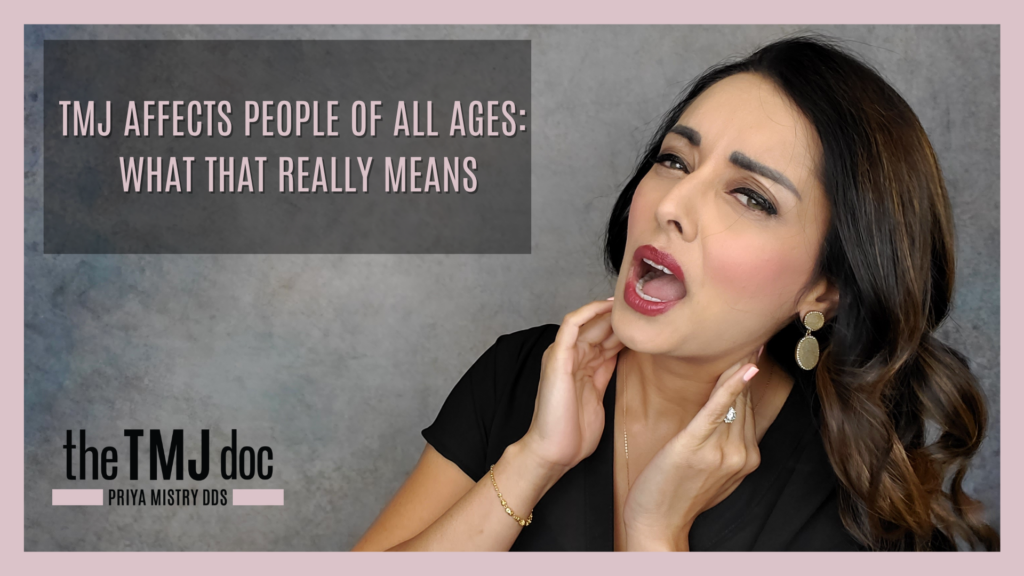
Many people assume TMJ is something that only affects adults, but that is not the full picture. The TMJ Doc, Dr. Priya Mistry, often sees patients of all ages, from children to seniors, experiencing jaw pain, dysfunction, and related symptoms.
TMJ is not limited by age. It is a condition that can show up at any stage of life, and it often looks different depending on where you are on that journey.
What Is TMJ and Why It Matters at Every Age
The temporomandibular joint is the hinge that connects your jaw to your skull. It allows you to talk, chew, yawn, and function throughout the day.
When that system is not working properly, it can lead to:
- Jaw pain or tenderness
- Clicking or popping
- Difficulty chewing
- Headaches or ear discomfort
- Neck and shoulder tension
- Limited movement or jaw locking
Because this joint is used constantly, even small dysfunctions can have a big impact on daily life.
TMJ in Children and Adolescents
TMJ does not start in adulthood for everyone.
The TMJ Doc often sees younger patients dealing with:
- Teeth grinding, especially at night
- Jaw development that is not fully aligned
- Early signs of muscle tension or discomfort
These issues are often overlooked, but early awareness matters. Addressing symptoms sooner can help prevent long-term patterns from developing.
TMJ in Adults
Adults are the most commonly affected group, especially between ages 20 and 40.
At this stage, TMJ is often linked to:
- Stress and jaw clenching
- Teeth grinding, also known as bruxism
- Injury or strain to the jaw
- Bite changes over time
This is when symptoms tend to become more noticeable and disruptive, especially with busy schedules, high stress, and daily habits that put strain on the jaw.
TMJ in Seniors
As the body ages, the jaw is no exception.
Older adults may experience TMJ symptoms due to:
- Wear and tear on the joint
- Changes in bite or missing teeth
- Long-standing habits or untreated issues
Symptoms may feel different, but the impact on quality of life can be just as significant.
Why TMJ Looks Different at Every Stage of Life
The TMJ Doc wants patients to understand that TMJ is not a one-size-fits-all condition.
It changes based on:
- Growth and development
- Lifestyle and stress levels
- Habits like clenching or grinding
- Structural changes in the jaw over time
Even though symptoms may vary, the underlying theme is the same, the jaw, muscles, and bite are not working together the way they should.
Small Changes with Big Impact
No matter your age, small daily habits can reduce strain on the jaw:
- Keep lips together and teeth slightly apart
- Avoid clenching during stress or focus
- Limit hard, crunchy, or chewy foods
- Be mindful of posture, especially head and neck alignment
- Use heat to relax tight muscles
These changes help calm the system and reduce unnecessary pressure on the joint.
Exercises The TMJ Doc Recommends
Gentle, consistent movement supports healthy function at any age:
- Controlled Jaw Opening
Open slowly while keeping movement centered
→ Encourages proper joint tracking - Tongue-Up Rest Position
Tongue lightly on the roof of the mouth
→ Helps stabilize the jaw - Chin Tucks
Gently pull the chin back
→ Improves posture and reduces strain - Jaw Relaxation Checks
Check throughout the day if your teeth are touching
→ Helps break clenching habits
When Home Care Alone Isn’t Enough
If symptoms:
- Keep coming back
- Are getting worse over time
- Interfere with eating, speaking, or sleeping
…it is time to look deeper.
TMJ is not just about age, it is about function. Without addressing how the jaw, muscles, and bite are working together, symptoms can persist at any stage of life.
Is It Time to Get Help?
TMJ can affect anyone, at any age, and that is exactly why it is so often misunderstood.
The TMJ Doc wants patients to know that no matter when symptoms start, there is a reason behind them, and there is a path forward.
Dr. Priya Mistry helps patients connect the dots between jaw function, habits, and overall health to create a personalized plan for lasting relief.
Schedule a consultation with The TMJ Doc today and take the first step toward better jaw health at any age.