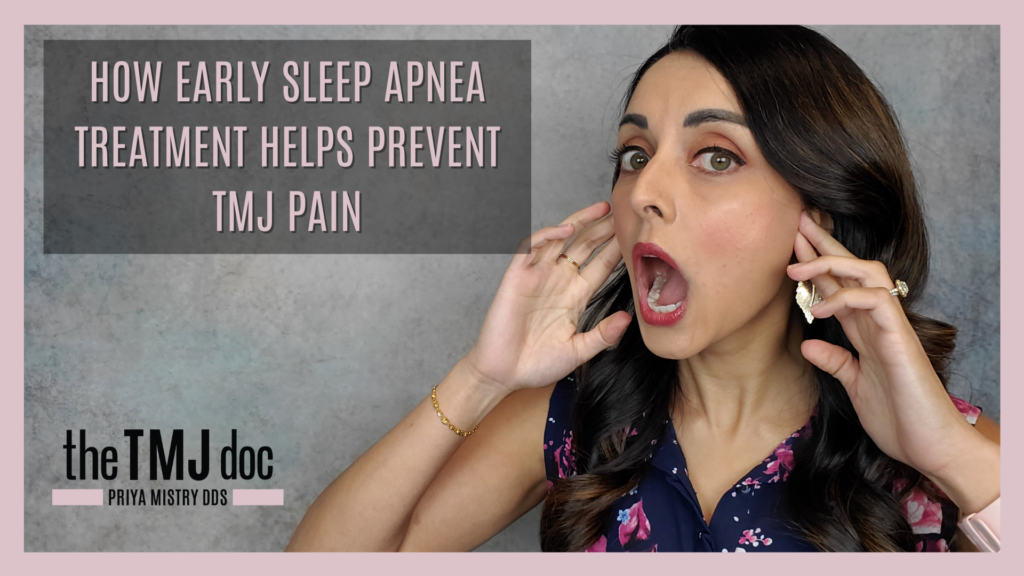
Jaw pain, headaches, jaw clicking, morning soreness, and tension in the face or neck — these are often seen as separate problems, but Dr. Priya Mistry knows they can be connected to something deeper: sleep apnea and airway dysfunction. When your airway doesn’t function optimally at night, your body unconsciously compensates by clenching or grinding your jaw, tightening muscles and loading the jaw joints; over time, that can contribute to TMJ pain and dysfunction.
Understanding this connection can make all the difference in how your jaw feels, how you sleep, and how your overall system functions.
Why Sleep and Jaw Health Are Connected
Your body seeks stability when breathing is interrupted during sleep; when your airway partially closes, the brain triggers muscle activity, especially in the jaw, tongue, and neck, to try to reopen the airway.
That increased muscle activity can lead to:
- Clenching and grinding at night
- Overworked jaw muscles that feel sore in the morning
- Pressure on the temporomandibular joints, leading to pain or stiffness
- Headaches upon waking
- Disrupted sleep that feeds back into stress and tension
Instead of viewing TMJ symptoms as isolated, The TMJ Doc sees them as part of a system response, where the airway, jaw muscles, and joints interact, especially during sleep.
Small Adjustments With Big Impact
Early identification and treatment of sleep apnea doesn’t just improve your breathing and sleep quality; it helps protect your jaw system from years of overload and strain.
Here’s how Dr. Mistry approaches it with patients:
- Airway evaluation: Assessing whether your breathing patterns during sleep may be contributing to grinding or clenching behavior;
- Breathing-friendly habits: Suggestions for sleep position, reducing nasal congestion, and improving overall airway function;
- Collaborative care: Referring to sleep specialists when needed, so that your airway and jaw can be treated as part of one interconnected system;
- Custom appliances as needed: In some cases, a therapeutic oral device can help keep your airway more open at night, reduce grinding, and relieve tension on the jaw joints;
- Lifestyle support: Addressing factors like weight management, caffeine use, alcohol intake, and sleep hygiene, all of which influence airway stability
These adjustments aren’t dramatic; they’re strategic, personalized, and aimed at preventing unnecessary stress on your TMJ system before it becomes entrenched.
When Simple Home Care Isn’t Enough
You may already be trying heat packs, jaw stretches, softer foods, or over-the-counter night guards, and yet the tightness, headaches, or jaw discomfort persist. That’s because grinding and TMJ strain can be symptoms of a bigger issue, airway instability during sleep.
Consider professional evaluation when:
- You snore loudly or frequently
- You wake gasping, choking, or with shortness of breath
- You have chronic fatigue or daytime sleepiness
- You notice persistent jaw tension, headaches, or muscle soreness upon waking
- You have been told you grind your teeth at night
When sleep apnea or airway breathing patterns go unaddressed, the jaw muscles are often forced into compensatory behavior that leads to long-term wear, pain, and dysfunction.
Is It Time to Get Help?
If your sleep quality is less than ideal, and you’re experiencing jaw discomfort, headaches, or grinding, don’t chalk it up to “just stress” or “just aging.” These symptoms may be your body’s way of signaling that the airway and jaw system need balanced support.
Dr. Priya Mistry at The TMJ Doc takes a holistic approach, connecting the dots between how you breathe at night, how your jaw muscles respond, and how the jaw joints function during the day. By addressing airway function early, you can protect your jaw from unnecessary strain and reduce the risk of developing long-term TMJ issues.
Ready to take the next step?
Schedule a consultation with The TMJ Doc today and explore how early airway evaluation and treatment can help protect your jaw, improve your sleep, and set the stage for lasting comfort and function. Your jaw, your sleep, and your quality of life deserve nothing less.