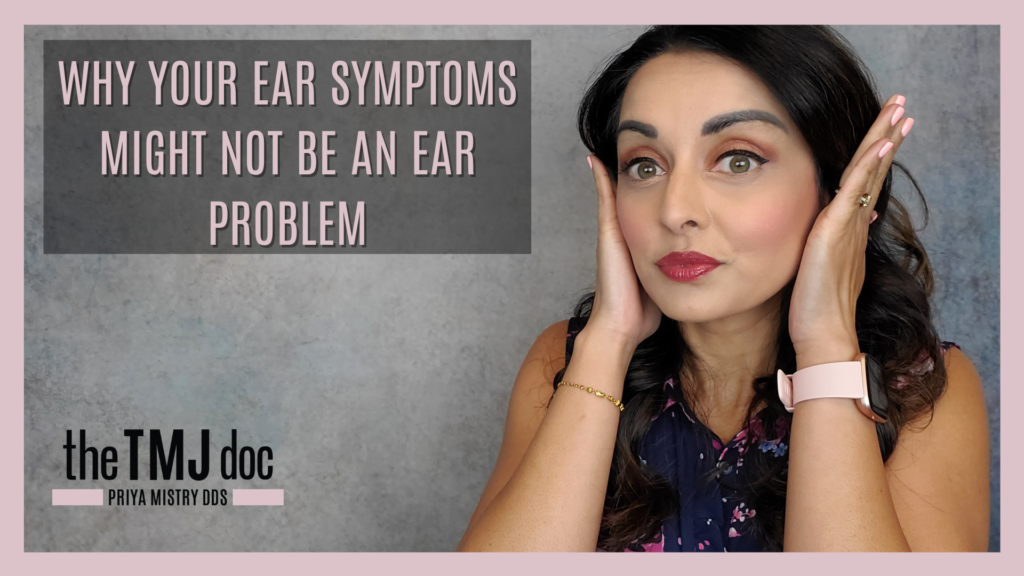
Ear pain can be confusing, especially when your ears look perfectly healthy. The TMJ Doc, Dr. Priya Mistry, often sees patients who have been told “nothing is wrong,” yet the discomfort is very real. In many of these cases, the source is not the ear at all, it is the jaw.
Understanding this connection can completely change how you approach your symptoms.
Why TMJ Affects the Ear
The jaw joint, also known as the temporomandibular joint (TMJ), sits just in front of the ear. Because of this close positioning, even small issues in the joint can create symptoms that feel like they are coming from the ear.
There are three main reasons this happens:
- Proximity: The TMJ is located directly next to the ear canal
- Shared nerves: The same nerve pathways transmit signals from both the jaw and the ear
- Shared muscles: Muscles involved in chewing and jaw movement surround the ear
When the jaw becomes irritated or inflamed, those signals can easily be felt in the ear.
How TMJ Creates Ear Pain
The TMJ Doc explains that ear symptoms from TMJ are often a form of referred pain, meaning the problem starts in one area but is felt in another.
Here is what is happening:
- Inflammation in the jaw joint irritates nearby nerves
- Muscle tension spreads into the area around the ear
- The brain interprets those signals as ear pain
Because these structures are so interconnected, the ear can feel like the source, even when it is not.
Common Ear Symptoms Linked to TMJ
TMJ-related ear symptoms can vary, but they often include:
- Earaches or aching around the ear
- Ringing in the ears, also known as tinnitus
- A feeling of fullness or pressure
- Muffled or fluctuating hearing
- Pain that worsens with chewing or talking
These symptoms can closely mimic an ear infection, which is why they are often misdiagnosed.
Why It Is Often Misdiagnosed
One of the most frustrating parts is that ear exams often come back to normal.
That is because:
- There is no infection or damage in the ear itself
- The issue is coming from the jaw and surrounding muscles
- Standard ear treatments do not address the root cause
This is why patients may go from provider to provider without getting lasting relief.
Small Changes with Big Impact
The TMJ Doc often recommends starting with simple habits that reduce strain on the jaw and surrounding structures:
- Keep lips together and teeth slightly apart
- Avoid clenching during stress or focus
- Limit gum chewing and hard foods
- Use heat to relax tight muscles
- Maintain good posture, especially head and neck alignment
These changes can help calm inflammation and reduce referred pain to the ear.
Exercises The TMJ Doc Recommends
Gentle movement helps restore balance and reduce tension:
- Controlled Jaw Opening
Open slowly while keeping movement centered
→ Helps reduce joint irritation - Tongue-Up Rest Position
Tongue lightly on the roof of the mouth
→ Stabilizes the jaw and reduces clenching - Side-to-Side Jaw Glides
Move the jaw gently left and right
→ Improves mobility and coordination - Relaxation Breathing
Slow breathing with relaxed shoulders
→ Reduces muscle tension around the jaw and ear
When Home Care Alone Isn’t Enough
If your ear symptoms:
- Keep coming back
- Are not explained by ear exams
- Change with jaw movement or chewing
…it is time to look at the jaw.
TMJ-related ear pain often requires a deeper evaluation of how the joint, muscles, and bite are working together.
Is It Time to Get Help?
Ear pain is not always an ear problem.
The TMJ Doc wants patients to understand that if your symptoms are not adding up, there is likely a reason, and it often starts with the jaw.
Dr. Priya Mistry helps patients identify the true source of their pain and create a personalized plan to restore comfort and function.
Schedule a consultation with The TMJ Doc today and finally get answers to what your ear has been trying to tell you.