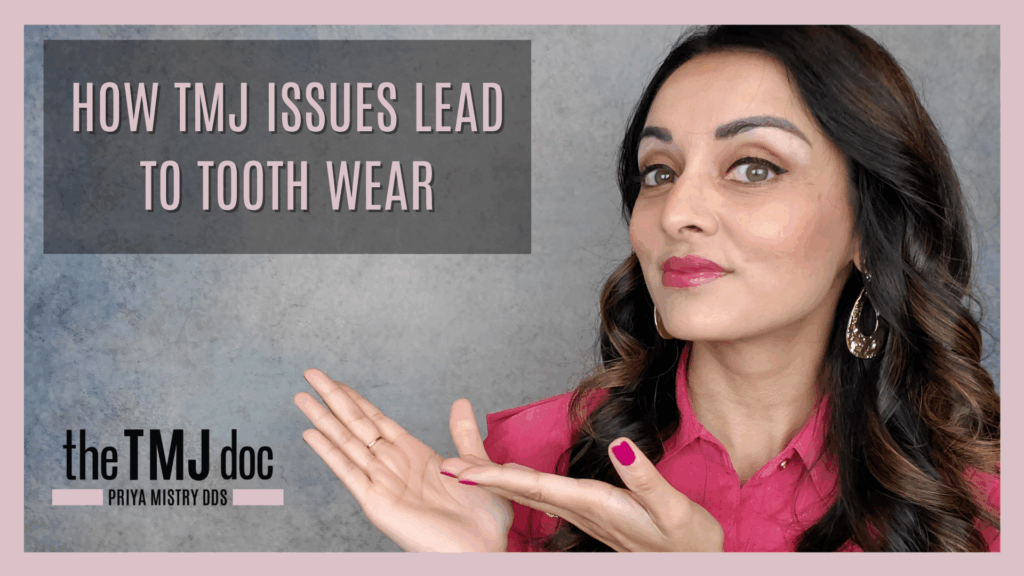
When patients come into The TMJ Doc reporting jaw tightness, headaches, or grinding at night, they’re often focused on the pain. But Dr. Priya Mistry wants patients to understand another consequence that often sneaks up quietly: tooth wear. The way your jaw functions (and dysfunctions) plays a major role in how quickly your teeth wear down over time.
Here’s how TMJ problems and tooth wear are connected, and what you can do to protect your smile.
Why TMJ Problems Affect Your Teeth
Your teeth don’t wear down randomly. They wear down because of forces, usually excessive ones.
When the jaw joint isn’t stable, when muscles are overworking, or when your bite is out of balance, those forces go straight to your enamel.
Some common patterns The TMJ Doc sees include:
Clenching and grinding
This is one of the biggest contributors to tooth wear. When the brain senses instability in the jaw joint, it often causes the muscles to clench as a form of “self-stabilizing.” This can flatten, chip, or fracture the teeth over time.
Bite imbalance
If your bite doesn’t come together evenly, certain teeth can hit harder than they should. These overloaded teeth can be worn down faster.
Muscle overactivity
Tight or fatigued muscles apply tremendous pressure—sometimes hundreds of pounds of force, leading to enamel loss, fractures, and discomfort.
Erosion + mechanical wear
Acidic foods and drinks soften enamel, making grinding forces even more damaging.
When these factors combine, tooth wear accelerates. That’s why Dr. Mistry evaluates both the jaw joint and the teeth; they’re part of the same system.
Small Changes With Big Impact
One thing patients appreciate about The TMJ Doc is how she breaks down complex problems into simple, doable steps. With tooth wear, small, targeted changes can make a huge difference.
Here’s how Dr. Mistry helps protect your smile:
- A full evaluation of wear patterns so she can determine why the damage is happening, not just patch it up.
- Custom splint or nightguard therapy to reduce grinding forces and support the jaw joint while you sleep.
- Bite balancing when appropriate so no single tooth is taking the brunt of the force.
- Jaw and muscle therapy strategies to calm overactive muscles and reduce clenching triggers.
- Habit and lifestyle coaching — limiting acidic drinks, avoiding hard foods, stopping chewing on pens or ice, and improving tongue-up posture during the day.
Many patients see improvements not only in tooth wear but also in headaches, jaw tension, and sleep quality once the system is stabilized.
When Home Care Alone Isn’t Enough
Heat packs, better posture, softer foods, and mindfulness can all help. But if the underlying jaw imbalance isn’t addressed, tooth wear often continues, sometimes silently.
Without proper TMJ-focused care, patients may face:
- Teeth becoming shorter, flatter, or more sensitive
- Chipped or broken restorations
- More frequent dental work like crowns or veneers
- A bite that continues shifting or worsening
- Long-term damage that becomes more difficult (and expensive) to repair
The TMJ Doc’s approach focuses on protecting your teeth and correcting the root cause, so the cycle finally stops.
Is It Time to Get Help?
If you’ve noticed your teeth looking shorter, flatter, chipped, or more sensitive, or if you’re waking up with jaw pain or headaches, it may be time for a TMJ-focused evaluation.
Dr. Priya Mistry understands the connection between your jaw, your muscles, your bite, and your enamel. By treating the whole system, she helps patients preserve their teeth, reduce pain, and protect their long-term oral health.
Ready to take the next step?
Schedule a consultation with The TMJ Doc and get a comprehensive evaluation of your jaw, bite, and tooth wear. Your smile and comfort deserve it.