
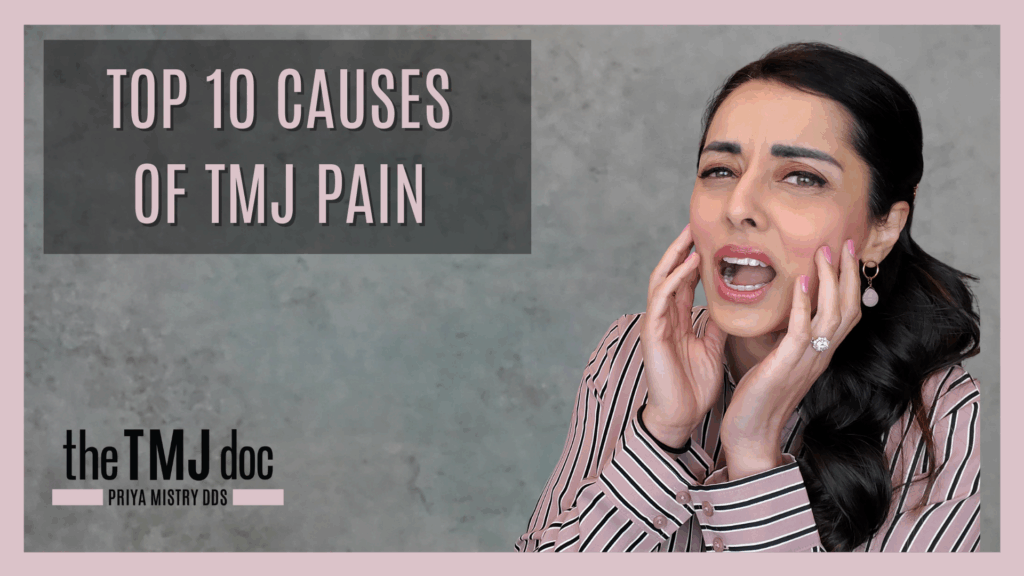
Jaw pain, clicking, headaches, or bite shifts, these can all point to TMJ dysfunction. Dr. Priya Mistry believes the first step to lasting relief is understanding why the problem started in the first place. Here are the top 10 underlying causes of TMJ pain and practical steps you can take with The TMJ Doc’s guidance.
Why knowing the cause matters
If you treat only the symptom (jaw pain), you often miss the hidden driver: whether it’s muscle overload, joint stress, bite misalignment, airway issues, or habits. Addressing the root causes means your relief lasts.
1. Muscle Overload
When your chewing muscles constantly work, because of clenching, grinding, and poor posture, they apply excessive force to your jaw joint.
What you can do: Begin muscle-relaxation routines, use a custom appliance to reduce teeth-on-teeth forces, and work with The TMJ Doc on stress-related triggers.
2. Bite Imbalance
If your upper and lower teeth don’t meet evenly, some teeth take more load, and your jaw adjusts in response, leading to strain.
What you can do: Get a full bite evaluation, ask about how your teeth meet at rest, and consider minor adjustment or a splint to balance forces.
3. Joint Dysfunction
Your temporomandibular joint can become compressed, misaligned, inflamed, or fatigued from repetitive overload.
What you can do: Seek a provider who assesses joint motion, can detect clicking/locking early, and use imaging or jaw tracking where needed.
4. Poor Posture and Neck/Shoulder Tension
Your jaw, neck, and shoulders are connected. Forward-head posture or tight upper-body muscles can shift your jaw mechanics.
What you can do: Improve your daytime posture (shoulders back, tongue up, lips together), use physical-therapy style stretches, and include neck/shoulder relief in your protocol.
5. Sleep Disorders and Airway Issues
Breathing disruptions while sleeping force your body to clamp down for stability, often via the jaw muscles, which then leads to pain.
What you can do: If you snore, wake gasping, or have daytime fatigue, get screened for sleep-apnea or airway dysfunction. Include airway health in your TMJ plan.
6. Clenching and Grinding (Bruxism)
Whether awake or asleep, repetitive teeth-grinding applies heavy force to the joint and muscles.
What you can do: Use a custom appliance, reduce stimulants (caffeine/energy drinks), practice daytime awareness of tooth contact, and follow the habit-coaching The TMJ Doc offers.
7. Trauma or Injury
A blow to the jaw, a bad fall, whiplash, any impact can disrupt the joint, muscles, or bite and trigger TMJ problems.
What you can do: Even if the incident was years ago, mention it. Ask for a thorough joint and bite history and account for prior injuries in your treatment plan.
8. Excessive Non-Food Jaw Use
Chewing gum constantly, biting on pens or nails, frequent ice chewing, these habits overload your system.
What you can do: Track and stop non-food chewing habits, switch off gum, and replace with healthier jaw-friendly routines. The TMJ Doc will help you build that habit change.
9. Missing Teeth or Poor Restorations
When teeth are missing or poorly aligned, restorations exist; your jaw compensates, often harming the joint and muscles.
What you can do: Get an evaluation of your overall bite context, ask whether previous landmarks (teeth, implants, crowns) affect your jaw alignment, and consider full system planning rather than isolated fixes.
10. Stress & Emotional Factors
Stress increases muscle tone, triggers clenching, affects posture and sleep, all of which impact the jaw system.
What you can do: Practice stress management (mindfulness, deep breathing, body awareness), integrate it into your dental plan, and coordinate with your TMJ specialist for a holistic approach.
Is It Time To Get Help?
If one or more of these causes resonate with you, it’s time to go beyond standard dentistry and seek an expert who understands the full jaw–muscle–bite–airway system. Dr. Priya Mistry at The TMJ Doc specializes in connecting all these pieces, so your treatment isn’t just “one symptom” but a lasting solution.
Ready to start the journey?
Schedule a consultation with The TMJ Doc today for a comprehensive evaluation of your jaw system and begin tackling the cause, not just the pain.