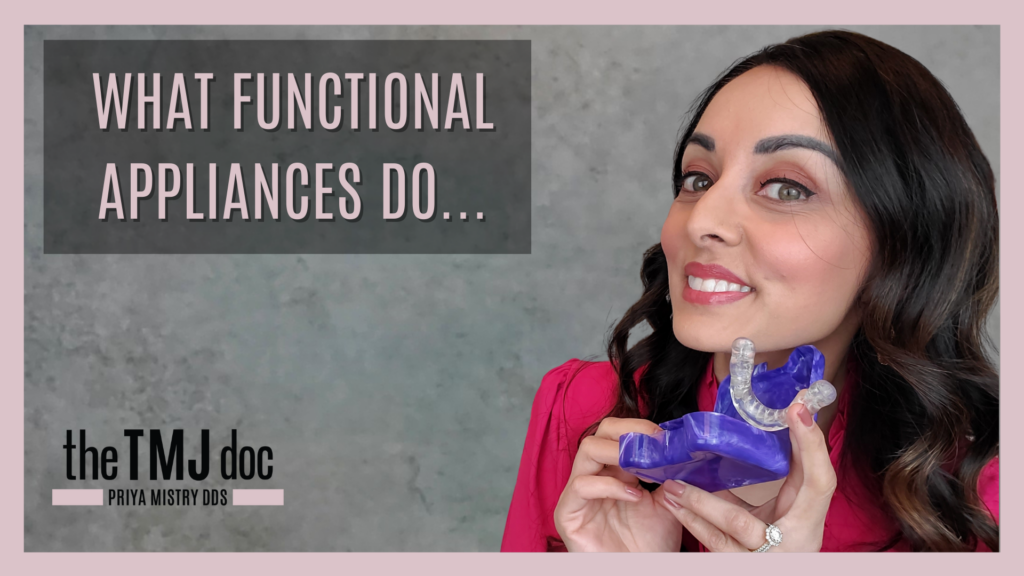
When patients hear the term functional appliance, they often think “orthodontics for kids” or “something that straightens teeth.” But Dr. Priya Mistry wants you to understand that in the world of jaw pain, muscle tension, and TMJ dysfunction, functional appliances aren’t about looks; they’re about function. These custom devices help guide your jaw into a more relaxed, balanced position so your muscles and joints can work the way they’re meant to.
Here’s how functional appliances work, why they matter for TMJ, and when they might be part of your treatment plan.
Why Function Matters More Than Form
Your jaw isn’t just a hinge. It’s part of a complex system made up of bones, muscles, ligaments, teeth, and the temporomandibular joints. When this system is out of balance, muscles overwork, joints compensate, and your bite can be misaligned.
That imbalance often shows up as:
- Jaw pain or stiffness
- Headaches and neck tension
- Ear pressure or popping/clicking
- Grinding or clenching habits
- Changes in how your bite feels
Functional appliances help rebalance the system by gently guiding the jaw into a healthier resting and working position. This gives overloaded muscles a chance to relax, eases pressure on the joint and helps improve bite coordination.
Small Changes That Make a Big Difference
Functional appliances are customized to you, and small shifts in how your jaw sits or moves can create big relief.
Here’s how Dr. Mistry uses them in practice:
- Relax the muscles: By positioning your jaw so muscles don’t have to overwork, tension can decrease, and pain often eases.
- Support the joint: When your jaw is in a healthier position, the temporomandibular joints aren’t forced to adapt to strain, giving them space to function with less discomfort.
- Guide the bite: Rather than just covering your teeth like a traditional night guard, functional appliances can subtly help your bite settle into better alignment.
- Improve movement: With relaxed muscles and less joint compression, opening, closing, and sideways motion can feel smoother and more natural.
- Teach the system: Over time, your muscles and nervous system adapt to the better position, often leading to lasting improvements even when you’re not wearing the appliance.
These are not “quick fixes.” They’re thoughtful adjustments that encourage your jaw system to change the way it works which pays off in comfort and function.
Functional Appliances Versus Other Bite Devices
Not all oral devices are created equally. A generic nightguard might protect your teeth from wear, but it doesn’t always help your muscles relax or your joints decompress. Functional appliances are designed with those goals in mind.
Here’s the difference:
- Night Guard: Protects your teeth from grinding but may not change the position of the jaw.
- Functional Appliance: Actively encourages a healthier jaw position, reducing tension at the source.
- Splints or Orthotics: Customized to you, often after a muscle-relaxing evaluation, supporting both muscle and joint health.
Dr. Mistry evaluates your unique jaw system and chooses the right device; one that not only protects your teeth but supports your recovery.
When Functional Appliances Are a Good Option
Functional appliances are often recommended when:
- You have persistent jaw or facial pain
- Your bite feels uncomfortable or uneven
- You experience frequent tension or migraines
- You’ve tried a generic night guard but still have symptoms
- Your muscles are chronically tight or fatigued
- You have joint noises like clicking or popping
If your symptoms are coming from muscle overactivity, joint loading, or bite imbalance, this type of appliance can be a foundational part of your TMJ care.
Is It Time to Get Help?
If you’ve been managing jaw tension, headaches, or bite discomfort on your own and it’s not getting better; it might be time for a deeper look.
Dr. Priya Mistry at The TMJ Doc takes the time to understand how your jaw functions as part of your whole system. She evaluates posture, muscles, joint movement, and bite relationships so any appliance you receive supports true function, not just symptom masking.
Ready to find real relief?
Schedule a consultation with The TMJ Doc today and explore whether a functional appliance could be the next step toward lasting comfort and a balanced jaw system. Your jaw deserves more than coping, it deserves healing.