
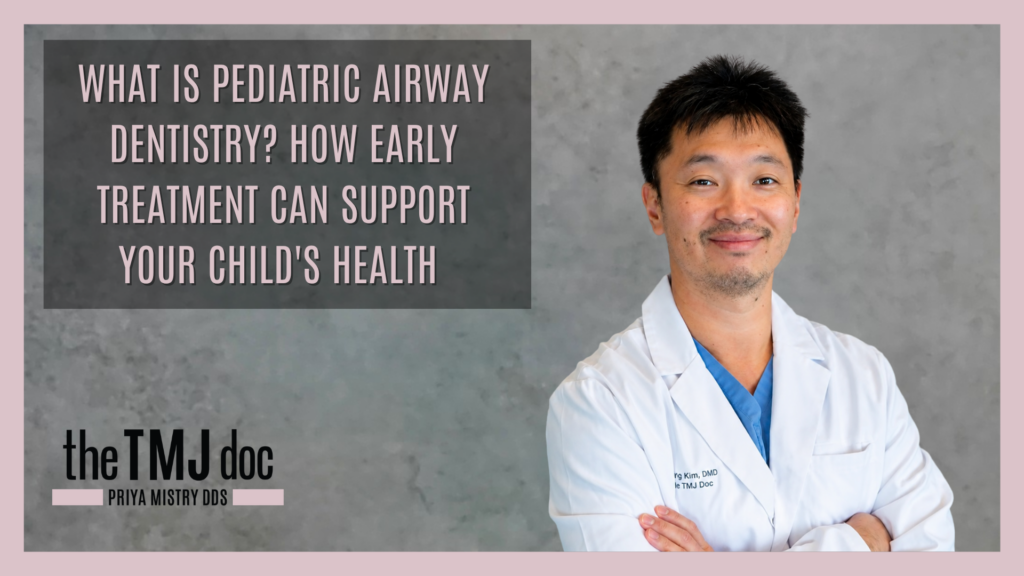
As parents, we often think of the dentist as the person who helps prevent cavities and keeps our children’s teeth healthy. But what if a routine dental visit could also uncover issues affecting your child’s sleep, breathing, behavior, and overall development?
That’s the goal of pediatric airway dentistry.
Airway-focused dentistry looks beyond the teeth to evaluate how your child’s airway, breathing patterns, jaw growth, and oral development work together. Identifying concerns early can help support healthier growth and may prevent more significant problems later in life.
What Is Pediatric Airway Dentistry?
Pediatric airway dentistry focuses on how a child’s breathing affects the development of their mouth, jaws, face, and overall health.
Children should ideally breathe through their noses both during the day and while sleeping. When a child consistently breathes through their mouth or struggles to maintain an open airway at night, it can influence facial growth, sleep quality, behavior, and oral health. Early screening allows these concerns to be recognized while a child’s bones and muscles are still developing.
Rather than simply treating symptoms, airway dentistry looks for the underlying reasons a child may not be breathing efficiently.
Why Healthy Breathing Matters
Breathing is something we rarely think about until it becomes difficult.
Children who don’t receive enough quality airflow during sleep often experience repeated interruptions throughout the night. Even if they never fully wake up, their sleep may not be as restorative as it should be.
Poor sleep can affect many aspects of a child’s health, including:
- Physical growth
- Brain development
- Learning and memory
- Emotional regulation
- Energy levels
- Immune function
- Facial and jaw development
Healthy breathing supports healthy development from infancy through adolescence.
Signs Your Child May Benefit From an Airway Evaluation
Many parents don’t realize that common childhood behaviors can sometimes be related to breathing issues.
Some signs to watch for include:
- Frequent mouth breathing
- Loud snoring
- Restless sleep
- Teeth grinding during sleep
- Dark circles under the eyes
- Difficulty focusing at school
- Hyperactivity
- Bedwetting beyond the expected age
- Frequent headaches
- Chronic nasal congestion
- Forward head posture
- Crowded teeth or narrow dental arches
While these symptoms don’t automatically mean your child has an airway problem, they may indicate that further evaluation is appropriate.
How Airway Development Affects the Face and Teeth
The way a child breathes influences how their jaws develop.
When children breathe through their noses, the tongue naturally rests against the roof of the mouth, helping guide proper jaw growth.
Chronic mouth breathing often changes tongue posture, which can contribute to:
- Narrow upper jaws
- Crowded teeth
- High, narrow palates
- Bite problems
- Recessed jaws
- Changes in facial growth
These developmental changes may also make it more difficult to maintain a healthy airway as children grow.
Airway Dentistry Is About Prevention
One of the biggest advantages of evaluating airway health during childhood is that growth is still occurring.
Instead of waiting until adulthood when treatment may become more complex, early identification allows healthcare providers to support healthy development during the years when the body is most adaptable.
Many children benefit from simple interventions that encourage healthy breathing habits and proper oral development before larger problems develop.
How Dr. Kim Evaluates Airway Health
At TMJ Dental Doc, Dr. Kyung Kim takes a comprehensive approach to evaluating children who may have airway concerns.
An airway assessment may include evaluating:
- Breathing patterns
- Tongue posture
- Jaw growth
- Facial development
- Bite alignment
- Dental arch width
- Sleep habits
- Oral muscle function
- Signs of teeth grinding or clenching
Because airway health affects the entire body, Dr. Kim also discusses your child’s medical history, sleep quality, and any symptoms you’ve noticed at home.
The goal is to understand how all of these pieces work together, not simply whether your child has cavities.
What Happens if an Airway Concern Is Found?
Every child is different, and treatment depends on the underlying cause.
Recommendations may include:
- Myofunctional therapy
- Improving nasal breathing habits
- Monitoring jaw growth
- Expansion therapy when appropriate
- Habit correction
- Collaboration with pediatricians, ENT physicians, sleep specialists, or orthodontists
Because airway health often involves multiple body systems, collaboration with other healthcare providers is an important part of comprehensive care.
Why Early Intervention Matters
Children’s faces and jaws develop rapidly during the early years of life.
Identifying airway concerns during these growth periods may help reduce the need for more complex treatment later while supporting healthier breathing, improved sleep, and better overall development.
Even if your child appears healthy, routine airway screenings can provide valuable information about how they’re growing and whether their breathing is supporting optimal development.
What Dr. Kim Wants You to Know
Healthy smiles begin with healthy breathing. Pediatric airway dentistry isn’t just about teeth, it’s about helping children develop in a way that supports restful sleep, proper jaw growth, and lifelong wellness.
Dr. Kyung Kim believes that early identification of airway concerns gives families the opportunity to address potential problems before they become lifelong challenges. By evaluating breathing, jaw development, and oral function together, he helps parents better understand their child’s overall health and creates personalized treatment plans designed to support healthy growth for years to come.