Most parents know they should schedule their baby’s first dental appointment around their first birthday or when the first tooth appears. What many don’t realize is that this visit can reveal much more than whether a tiny tooth has a cavity.
Your baby’s first dental visit is an opportunity to evaluate how they’re growing, breathing, feeding, and developing. By assessing oral function and airway health early in life, potential concerns can often be recognized long before they begin affecting sleep, facial growth, or overall health.
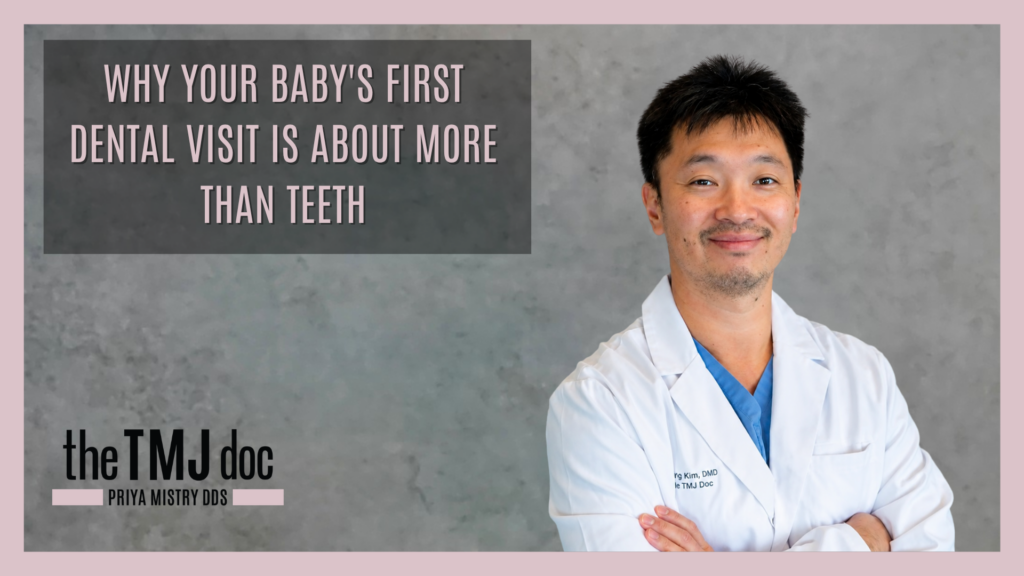
At TMJ Dental Doc, Dr. Kyung Kim believes that early evaluations are about creating a healthy foundation for lifelong breathing, sleeping, and oral development, not simply counting baby teeth.
When Should Your Baby First See a Dentist?
The American Academy of Pediatric Dentistry recommends that children visit a dentist by their first birthday or within six months after the eruption of their first tooth. While many parents schedule this appointment to discuss teething or cavity prevention, it also provides an ideal opportunity to evaluate healthy oral development and identify early functional concerns.
The earlier potential issues are recognized, the more opportunities there may be to guide healthy growth.
Why Airway Health Matters in Infants
Healthy breathing begins at birth.
Infants are designed to breathe primarily through their noses. Nasal breathing supports proper oxygen delivery, healthy tongue posture, normal jaw development, and restful sleep.
If breathing becomes restricted, whether from oral restrictions, nasal congestion, or other developmental concerns, it can influence how your baby’s face and jaws grow over time.
This is why airway-focused dentistry begins much earlier than most parents expect.
What Dr. Kim Looks For During an Infant Evaluation
An infant airway assessment is gentle, non-invasive, and designed to evaluate how your baby’s mouth is functioning as they grow.
During the visit, Dr. Kim may evaluate:
- Tongue mobility
- Lip function
- Oral muscle development
- Jaw growth
- Palate shape
- Nasal breathing
- Feeding patterns
- Early eruption of baby teeth
- Overall oral development
Rather than looking for problems alone, the goal is to understand whether your baby’s oral structures are developing in a way that supports healthy breathing and function.
Feeding Can Provide Important Clues
How your baby feeds often provides valuable information about oral development.
Parents may mention:
- Difficulty breastfeeding
- Pain during nursing
- Poor latch
- Clicking noises while feeding
- Prolonged feeding sessions
- Frequent gas or swallowing excess air
- Difficulty transitioning to bottles
- Slow weight gain
While these challenges can have many different causes, they sometimes indicate oral restrictions or functional concerns that deserve further evaluation.
Early Airway Screening Is About Prevention
Many airway-related conditions develop gradually over time.
Children don’t suddenly become mouth breathers or develop crowded teeth overnight. These changes often begin very early as the face, jaws, and airway continue to grow.
Early screening allows providers to monitor development and identify concerns before they become more significant.
Potential issues that may benefit from early evaluation include:
- Mouth breathing
- Narrow palate development
- Poor tongue posture
- Oral restrictions
- Sleep-disordered breathing
- Abnormal swallowing patterns
- Delayed oral muscle development
Early recognition doesn’t always mean treatment is immediately necessary. In many cases, it simply allows families to monitor growth more closely and intervene if needed.
Signs Parents Should Mention During the Visit
Even if your baby seems healthy, it’s helpful to discuss any concerns you’ve noticed at home.
These may include:
- Noisy breathing
- Frequent snoring
- Sleeping with an open mouth
- Restless sleep
- Difficulty staying asleep
- Reflux symptoms
- Feeding difficulties
- Persistent congestion
- Trouble soothing after feedings
These observations help create a more complete picture of your baby’s overall development.
A Team Approach to Healthy Development
Airway health often involves more than dentistry alone.
When appropriate, Dr. Kim works alongside pediatricians, lactation consultants, ear, nose, and throat physicians, speech-language pathologists, myofunctional therapists, and other healthcare professionals to ensure children receive comprehensive care.
This collaborative approach focuses on supporting healthy growth rather than waiting for problems to become more complex.
Building Healthy Habits From the Very Beginning
Your baby’s first dental appointment is also an opportunity to learn about:
- Cleaning infant gums and teeth
- Preventing early childhood cavities
- Pacifier and thumb-sucking habits
- Nutrition for healthy oral development
- Teething expectations
- Fluoride recommendations
- Healthy sleep and breathing habits
These conversations help parents feel confident as their child continues to grow.
What Dr. Kim Wants You to Know
Your baby’s first dental visit is about much more than checking for cavities. It’s one of the earliest opportunities to evaluate how your child is breathing, feeding, growing, and developing. By looking at airway health alongside oral development, potential concerns can often be identified long before they begin affecting sleep, facial growth, or overall wellness.
Dr. Kyung Kim believes that prevention starts early. Through comprehensive infant evaluations and airway-focused care, he partners with families to support healthy breathing, proper jaw development, and lifelong oral health from the very beginning.