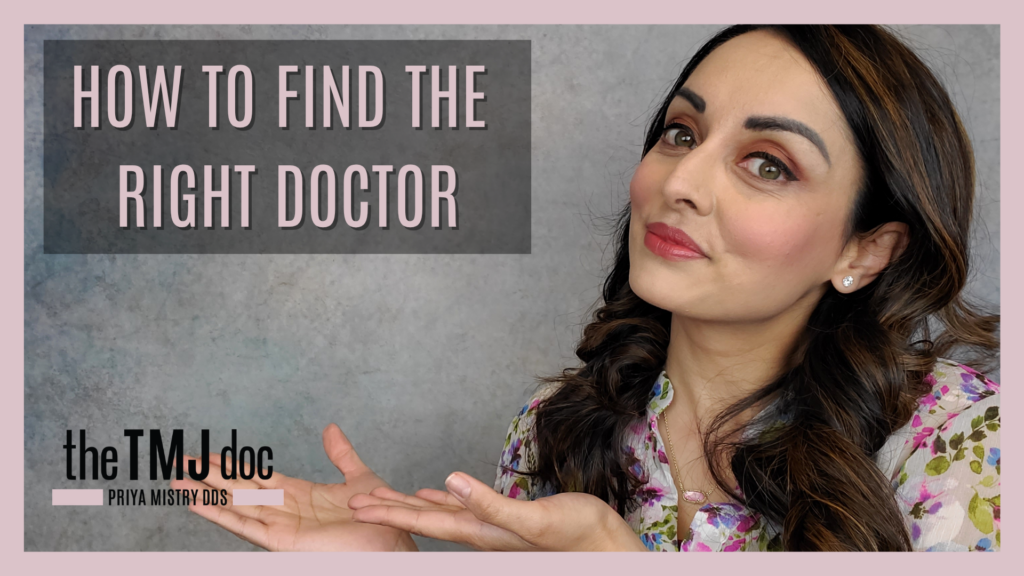
How do you know if you’re seeing the right doctor?
It’s a question Dr. Priya Mistry hears constantly from patients and followers, especially from people who have spent years searching for answers to chronic jaw pain, headaches, sleep problems, or other symptoms.
In this episode of Unclenched, Dr. Mistry and Dr. Alex sit down with longtime neuromuscular dentist and educator Dr. Konstantin Ronkin to tackle that question.
Dr. Ronkin is the author of How to Find the Right Doctor and Preserve Your Health and Youth and a Beautiful Smile, a book created to help patients better understand the connections between dentistry, breathing, the bite, the airway, TMD, sleep, and overall health.
The conversation goes far beyond finding a good dentist.
It’s about learning to ask better questions about your own health.
Treat the Patient, Not Just the Problem
One of the central ideas behind Dr. Ronkin’s book comes from a quote by physician Sir William Osler:
“A good doctor treats the disease. A great doctor treats the patient who has the disease.” That philosophy is at the heart of this episode.
In dentistry, it’s possible to create beautiful teeth while overlooking the larger system those teeth belong to.
Dr. Ronkin argues that modern dentistry needs to consider more than cavities, gums, crowns, and smiles. The bite, muscles, jaw joints, airway, breathing, sleep, and surrounding structures can all be relevant to understanding what’s happening with a patient.
For Dr. Mistry, that philosophy is especially important when treating TMD.
Don’t just ask where it hurts. Ask why it hurts.
“If Only I Had Known”
Dr. Ronkin says one phrase he repeatedly heard from patients ultimately inspired him to write his book:
“If only I had known.”
Patients would tell him they wished they’d understood more before undergoing certain dental procedures or making decisions about their teeth.
His goal became giving patients the information they need to participate more actively in those decisions.
The book isn’t about teaching patients to become dentists.
It’s about helping them understand enough to ask meaningful questions before making decisions that may affect their long-term oral health.
A Beautiful Smile Doesn’t Always Tell the Whole Story
One story from the book perfectly illustrates this point.
Dr. Ronkin describes a patient who had beautiful veneers but repeatedly experienced veneers coming off.
Instead of simply rebonding another veneer, he wanted to understand why it kept happening.
Further evaluation revealed a significantly restricted airway. Dr. Ronkin believed her lower jaw was moving forward during sleep as her body attempted to maintain airflow, bringing her lower teeth into damaging contact with the veneers.
The veneers weren’t necessarily the underlying problem.
They were where the problem was showing up.
That’s an important distinction.
Sometimes a broken tooth, worn teeth, clenching, or damaged dental work may be a clue that something else deserves investigation.
What Is Neuromuscular Dentistry?
Neuromuscular dentistry considers the relationship between the teeth, bite, jaw joints, and muscles rather than evaluating the teeth alone.
For Dr. Ronkin and Dr. Mistry, that means looking at how the jaw functions within a larger system.
- Where is the jaw most comfortable?
- How are the muscles functioning?
- What is happening with the joints?
- Could breathing or airway issues be contributing?
- What happens when the teeth come together?
Instead of simply making the teeth look straight or beautiful, the goal is to understand how the entire system functions together.
Why Nasal Breathing Matters
The conversation also turns to something that comes up frequently on Unclenched: Nasal breathing.
Dr. Ronkin explains that the nose is designed specifically for breathing. It helps filter, humidify, and condition incoming air.
Nasal breathing also plays a role in nitric oxide production and delivery.
The mouth, on the other hand, can provide an alternative route when nasal breathing is difficult.
That makes chronic mouth breathing something worth paying attention to, especially when it appears alongside snoring, clenching, poor sleep, or other airway concerns.
What Should You Look for in a Dentist?
Dr. Ronkin makes an important point:
The right dentist for one person may not necessarily be the right dentist for another.
Education and experience matter, but so do communication and trust.
For patients dealing with complicated symptoms, he recommends paying attention to how the dentist thinks.
Are they only looking at individual teeth?
Or are they asking questions about the bite, muscles, jaw position, breathing, sleep, airway, and overall function when those things are relevant?
A dentist doesn’t necessarily need to provide every type of treatment themselves.
But they should be willing to recognize when the problem may extend beyond what they see on the surface.
Straight Teeth Aren’t the Only Goal
One example discussed during the episode involves lower front teeth that are crowded.
The obvious solution might seem to be simply straightening them.
But Dr. Ronkin encourages clinicians to ask another question:
Why is there crowding in the first place?
Could there be inadequate space? How did the jaws develop? What is happening with the bite? Where is the tongue? Is there anything about the airway that deserves further evaluation?
That doesn’t mean every person with crowded teeth has TMD or sleep apnea.
It means appearance alone doesn’t always explain the complete situation.
Before correcting what something looks like, understanding why it developed that way can provide valuable information.
The Connection Between TMD and Sleep
Another major topic in the episode is the relationship between TMD, clenching, airway problems, and sleep-disordered breathing.
Snoring, daytime sleepiness, grinding, headaches, and unrestful sleep may provide clues that the airway deserves further evaluation.
Dr. Ronkin believes dental offices can play an important role in recognizing these signs because dentists routinely see structures of the mouth, teeth, jaws, and surrounding anatomy.
That doesn’t mean a dentist replaces a sleep physician.
It means dentists can be valuable members of the team when identifying patients who may need additional airway or sleep evaluation.
What Is “Anti-Aging Dentistry”?
One of the more unexpected parts of the conversation involves what Dr. Ronkin calls anti-age dentistry.
And he isn’t simply talking about whiter teeth.
His philosophy is that dentistry should consider both appearance and function.
A beautiful smile is valuable, but if the underlying bite, jaw position, muscles, or airway aren’t functioning well, improving appearance alone may not address the larger issue.
For Dr. Ronkin, dentistry that supports healthy function while improving aesthetics represents a more comprehensive approach to helping patients look and feel their best as they age.
Veneers Can Be About More Than Cosmetics
Veneers are often portrayed on social media as a purely cosmetic treatment.
Dr. Ronkin explains that this isn’t always the case.
In certain patients, restorative dentistry may also be used as part of rebuilding teeth that have been significantly worn or damaged.
The important step comes before the final restorations.
- Why did the teeth become worn?
- How is the patient biting?
- Where is the jaw positioned?
- Are the muscles comfortable?
Rather than simply restoring teeth into the same environment that contributed to the original problem, the underlying function should be considered as part of treatment planning.
Could Your Headache Be Related to Your Jaw?
Toward the end of the episode, Dr. Ronkin raises another important question.
When you have recurring headaches, who do you call?
Most people think about their primary care physician, neurologist, or an over-the-counter pain reliever.
They probably don’t think about their dentist.
But some headaches, particularly those around the temples, may have a muscular component involving the chewing muscles.
For patients who also experience jaw pain, clenching, grinding, limited movement, facial pain, or other TMD symptoms, evaluating the jaw and surrounding muscles may therefore be worth considering.
It comes back to the central lesson of the entire episode:
Symptoms tell you where something hurts. They don’t always tell you why.
What The TMJ Doc Wants You to Know
You deserve to understand why a treatment is being recommended.
Whether you’re considering orthodontics, veneers, TMJ treatment, a sleep appliance, or another dental procedure, don’t be afraid to ask questions.
- Why did this problem develop?
- Are we treating the symptom or addressing what may be contributing to it?
- How will this treatment affect my bite, jaw joints, muscles, breathing, and long-term function?
The right provider should be willing to have that conversation.
Dr. Mistry’s approach to TMD follows the same philosophy discussed throughout this episode: the jaw is part of a larger system.
Teeth matter. The bite matters. Muscles matter. Joints matter. Breathing and sleep can matter. And sometimes understanding how those pieces interact is what finally helps explain symptoms that previously didn’t seem connected.
In this episode of Unclenched, Dr. Priya Mistry, Dr. Alex, and Dr. Konstantin Ronkin challenge patients to become more informed participants in their own care, and remind providers to look beyond the individual tooth to the person sitting in the chair.
Listen to the full episode of Unclenched to hear the complete conversation with Dr. Konstantin Ronkin.