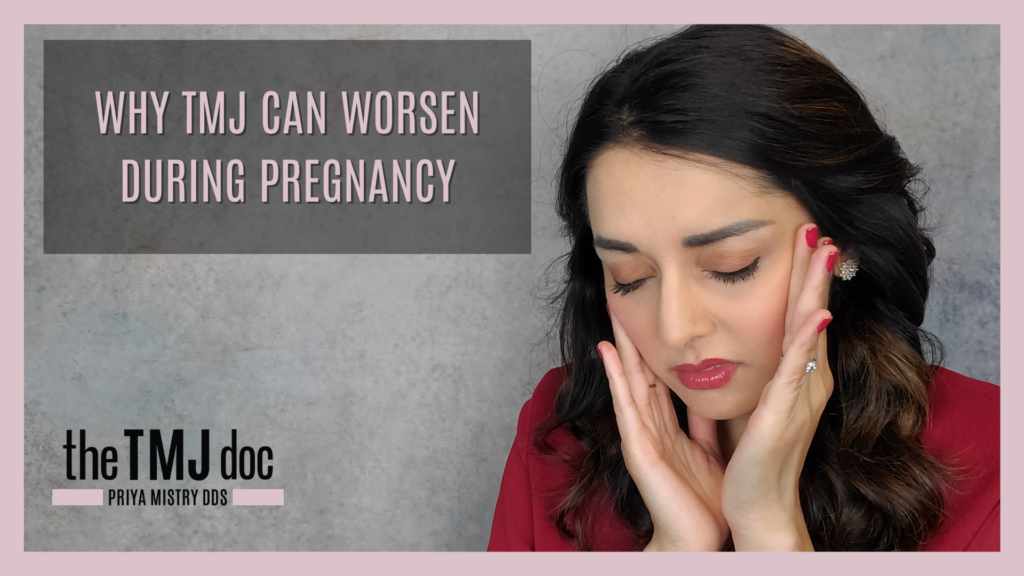
If you already deal with TMJ symptoms, pregnancy can feel like it turns the volume up. The TMJ Doc, Dr. Priya Mistry, often sees patients whose jaw pain, clicking, or tension becomes more noticeable during this time.
The reason is not just one thing. It is a combination of hormonal, physical, and lifestyle changes happening all at once.
Hormonal Changes That Affect the Jaw
Pregnancy introduces a surge of hormones like relaxin, estrogen, and progesterone.
These hormones:
- Loosen ligaments throughout the body, including the jaw
- Can make the TMJ less stable and more prone to irritation
- Increase inflammation and sensitivity in joint tissues
As the joint becomes more flexible, it may shift slightly out of alignment, which can lead to pain, clicking, or stiffness.
Sleep Disruption and Clenching
Sleep changes are almost unavoidable during pregnancy, and they have a direct impact on the jaw.
Disrupted sleep can:
- Increase teeth grinding, also known as bruxism
- Lead to muscle overactivity at night
- Cause morning jaw soreness and headaches
Many patients do not realize they are clenching or grinding until symptoms worsen.
Increased Stress on the Body
Even positive stress can affect the body physically.
During pregnancy:
- Emotional and physical stress levels rise
- Jaw clenching becomes more common
- Muscle tension builds in the face, neck, and shoulders
This constant tension places additional strain on the TMJ and surrounding muscles
Morning Sickness and Jaw Strain
One of the more overlooked factors is morning sickness.
Frequent vomiting can:
- Force the jaw forward repeatedly
- Strain ligaments and muscles
- Create inflammation and soreness in the joint
Even if it only lasts a few weeks, it can be enough to trigger or worsen symptoms.
Postural Changes as Pregnancy Progresses
As your body adapts, your posture shifts.
- Weight moves forward
- The head and neck compensate
- Jaw muscles take on more load
These changes can increase tension and contribute to TMJ discomfort
Small Changes with Big Impact
The TMJ Doc often recommends starting with simple, supportive habits:
- Keep lips together and teeth slightly apart
- Avoid clenching during stress or focus
- Stick to softer foods during flare-ups
- Use warm compresses to relax muscles
- Maintain good posture, especially head and neck alignment
These small adjustments can help reduce strain during a time when your body is already under increased demand.
Exercises The TMJ Doc Recommends
Gentle, consistent movement helps support the joint:
- Controlled Jaw Opening
Open slowly while keeping movement centered
→ Helps reduce joint irritation - Tongue-Up Rest Position
Tongue lightly on the roof of the mouth
→ Encourages proper jaw alignment - Chin Tucks
Gently pull the chin back
→ Improves posture and reduces strain - Relaxation Breathing
Slow breathing with relaxed shoulders
→ Helps decrease muscle tension and clenching
When Home Care Alone Isn’t Enough
If your symptoms:
- Are worsening during pregnancy
- Include locking, clicking, or limited movement
- Interfere with eating or sleeping
…it is time to look deeper.
TMJ flare-ups during pregnancy are often multi-factorial, meaning several causes are working together. Without addressing the full picture, symptoms may continue.
Is It Time to Get Help?
If your TMJ symptoms are getting worse during pregnancy, it is not random.
The TMJ Doc wants patients to understand that these changes are real, predictable, and treatable with the right approach.
Dr. Priya Mistry helps patients connect the dots between hormones, sleep, muscle tension, and jaw function to create a personalized plan for relief.
Schedule a consultation with The TMJ Doc today and get the support your body needs during this important time.